Clean Tar & Sap Off a Car with WD‑40
Materials Needed:
- WD‑40
- Microfiber cloths
- Mild car-wash soap
- Bucket of warm water
- Soft sponge
Instructions:
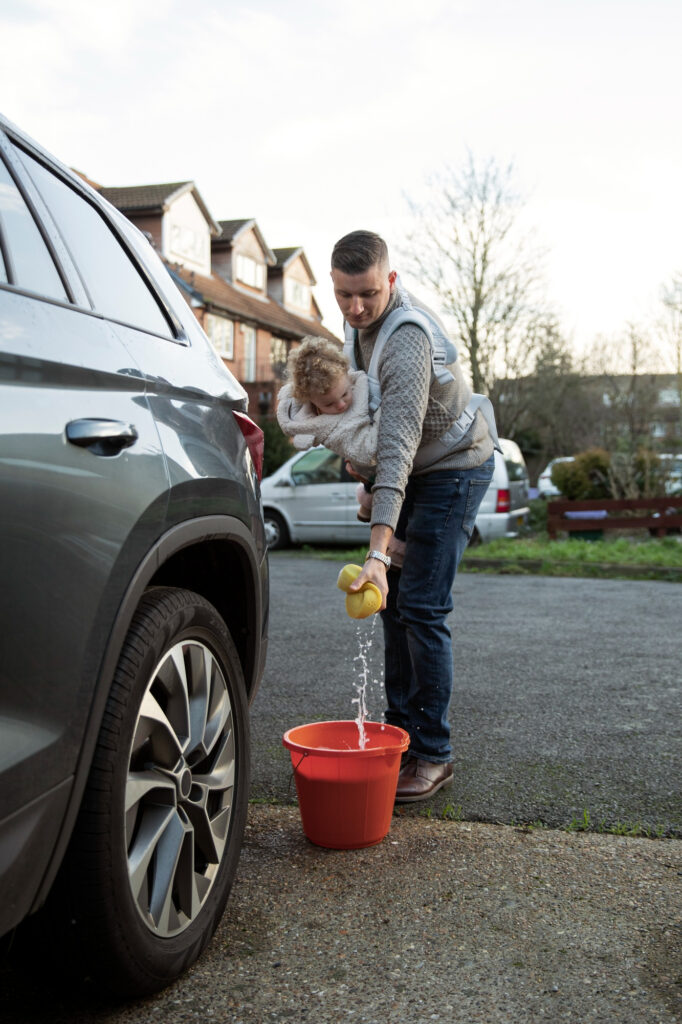
- Rinse the area with water to remove loose dirt.
- Spray a small amount of WD‑40 directly on the tar or sap spots (avoid overspray on plastic trim if you can).
- Wait 1–2 minutes so the WD‑40 can soften the tar/sap.
- Wipe gently with a microfiber cloth, working in small circles until the tar/sap lifts.
- Repeat spray + wipe on stubborn spots as needed.
- Wash the treated area with car‑wash soap and a sponge to remove WD‑40 residue.
- Rinse and dry with a clean microfiber cloth.
Tip: Work in the shade on cool paint so the product doesn’t dry too fast.
Shine Chrome with WD‑40
Materials Needed:
- WD‑40
- Soft microfiber cloths
- Mild soap and water (if surface is dusty/dirty)
Instructions:
- Clean the chrome first with mild soap and water, then dry well.
- Spray a light mist of WD‑40 onto a microfiber cloth (not directly on the chrome if you want more control).
- Wipe the chrome with the damp cloth, covering the whole surface.
- Buff with a dry, clean microfiber cloth until it shines and any streaks disappear.
Tip: Great for bathroom fixtures, bike parts, and car trim—avoid getting it on rubber brake pads or tire treads.
Clean Crayon Marks Off Walls with WD‑40
Materials Needed:
- WD‑40
- Soft cloths or paper towels
- Mild dish soap
- Warm water
Instructions:
- Test WD‑40 on a small hidden spot of the wall to be sure it doesn’t dull the paint.
- Spray a little WD‑40 onto a cloth (not directly on the wall).
- Rub the crayon marks gently with the cloth until they lift.
- Wash the area with a cloth dipped in warm, soapy water to remove any oily feel.
- Rinse and dry with a clean cloth.
Tip: Use a light touch on flat/matte paint; they mark more easily than semi‑gloss.
Remove Stickers with WD‑40
Materials Needed:
- WD‑40
- Plastic scraper or old credit card
- Paper towels or rags
- Mild soap and water
Instructions:
- Peel off as much of the top paper/plastic layer of the sticker as you can.
- Spray WD‑40 directly onto the remaining adhesive and edges of the sticker.
- Wait 1–3 minutes so it can soak into the glue.
- Scrape gently with a plastic scraper or card to lift the sticker and residue.
- Wipe away loosened glue with paper towels.
- Wash the area with soap and water to remove any leftover WD‑40.
Tip: On delicate surfaces, always test in a hidden spot first.
Polish Stainless‑Steel Appliances with WD‑40
Materials Needed:
- WD‑40
- Microfiber cloths
- Mild dish soap and water (for pre‑cleaning)
Instructions:
- Clean fingerprints and food splatters with warm, soapy water and dry thoroughly.
- Spray a small amount of WD‑40 onto a microfiber cloth (not directly on the appliance).
- Wipe the stainless steel, going with the grain of the metal.
- Buff with a second clean, dry cloth to remove excess and leave a smooth shine.
Tip: Use only a thin layer so the surface doesn’t feel greasy or attract dust.
Remove Gum from Shoes with WD‑40
Materials Needed:
- WD‑40
- Paper towels or rags
- Old toothbrush or small scrub brush
- Mild soap and water
Instructions:
- Take the shoes outside or to a well‑ventilated area.
- Spray WD‑40 directly onto the gum on the sole of the shoe.
- Wait 1–2 minutes to soften the gum.
- Scrub the gum with an old toothbrush or similar brush until it breaks up and releases.
- Wipe the area with paper towels to remove loosened gum and residue.
- Wash the sole with soapy water, then rinse and dry.
Tip: Avoid spraying WD‑40 on fabric or leather parts of the shoe; keep it on the sole.
Remove Dust & Shine Artificial Plants with WD‑40
Materials Needed:
- WD‑40
- Microfiber cloths
- Soft duster or soft brush
- Old towel or drop cloth (to protect surface)
Instructions:
- Move the plant onto a protected surface covered with a towel or drop cloth.
- Dust the leaves and stems with a soft duster or brush to remove loose dust.
- Spray a small amount of WD‑40 onto a microfiber cloth.
- Wipe each leaf lightly, front and back, to remove remaining dust and add a slight shine.
- Buff with a dry cloth if any spots look too shiny or feel oily.
Tip: Don’t soak the plant—very light product on the cloth is enough.
Prevent Water from Drying on Shower Doors with WD‑40
Materials Needed:
- WD‑40
- Microfiber cloths
- Glass cleaner (optional, for final wipe)
Instructions:
- Ventilate the bathroom well and keep the floor dry to avoid slipping.
- Clean the shower doors first with your usual bathroom cleaner and dry them fully.
- Spray a light mist of WD‑40 onto a microfiber cloth.
- Wipe the glass doors with a thin, even layer, covering the whole surface.
- Buff with a dry cloth until the glass looks clear, not hazy.
- (Optional) Finish with a quick pass of glass cleaner if you want a squeak‑free feel.
Safety Tip: Be careful not to let WD‑40 drip onto the tub or shower floor—it can make it very slippery. Wipe up any drips right away.
Clean Piano Keys with WD‑40 (Modern Plastic Keys Only)
Materials Needed:
- WD‑40
- Soft lint‑free cloths
- Slightly damp cloth (water only)
Instructions:
- Confirm the keys are modern plastic; do not use WD‑40 on old ivory keys.
- Turn off the piano/keyboard and unplug it if it’s electronic.
- Spray a tiny amount of WD‑40 onto a corner of a soft cloth.
- Wipe only the marked or sticky areas on the tops of the keys—avoid getting moisture between the keys.
- Follow immediately with a cloth lightly dampened with plain water to remove residue.
- Dry the keys with a clean, dry cloth.
Caution: This is for spot‑cleaning sticky marks, not general piano cleaning.
Remove Hard‑Water Stains from Faucets & Showerheads with WD‑40
Materials Needed:
- WD‑40
- Non‑scratch scrubbing pad or soft brush
- Microfiber cloths
- Warm water and mild soap
Instructions:
- Dry the faucet or showerhead so you can see the mineral spots clearly.
- Spray WD‑40 directly onto the stained areas.
- Wait 1–3 minutes so it can loosen the mineral deposits.
- Scrub gently with a non‑scratch pad or soft brush.
- Rinse well with warm water.
- Wash the area with mild soapy water, then rinse and dry with a microfiber cloth.
Tip: For heavy buildup inside a showerhead, regular vinegar soaks are usually better; use WD‑40 only on outer surfaces.
Remove Nail Polish & Scuff Marks from Tile Floors with WD‑40
Materials Needed:
- WD‑40
- Soft cloths
- Non‑scratch scrub pad (if needed)
- Mild floor cleaner and water
Instructions:
- Ventilate the room well.
- Test WD‑40 on a hidden tile to be sure it doesn’t affect the finish.
- Spray a small amount of WD‑40 onto a cloth.
- Rub the nail polish or scuff mark in small circles until it lifts.
- Use a non‑scratch pad gently on stubborn spots, if the tile finish allows.
- Clean the area with your regular floor cleaner and water to remove residue.
Safety Tip: WD‑40 can make the floor slippery, so clean and dry the area thoroughly before walking on it.
Keep Silver Shining with WD‑40 (for Display Pieces)
Materials Needed:
- WD‑40
- Soft polishing cloths
- Silver already cleaned/polished with your usual silver polish
Instructions:
- Clean and dry the silver first with a proper silver polish so tarnish is removed.
- Spray a light mist of WD‑40 onto a polishing cloth.
- Wipe the silver pieces with a thin coat over all exposed surfaces.
- Buff gently with a dry part of the cloth so they look bright, not greasy.
Caution: For silver that touches food (like flatware), wash well with dish soap and water before using, to remove any WD‑40.
Remove Toilet Stains with WD‑40
Materials Needed:
- WD‑40
- Toilet brush
- Rubber gloves
Instructions:
- Ventilate the bathroom and put on gloves.
- Spray WD‑40 directly on the mineral ring or stains inside the toilet bowl.
- Wait 5–10 minutes so it can loosen the deposits.
- Scrub the stains with a toilet brush until they lift.
- Flush to rinse everything away.
Caution: This is best for stubborn mineral rings. For routine cleaning, regular toilet cleaner is usually better and more eco‑friendly.
Shine Shoes with WD‑40 (Not for Suede or Delicate Leather)
Materials Needed:
- WD‑40
- Soft cloths
- Mild soap and water (for pre‑cleaning)
Instructions:
- Wipe off dirt and mud with a damp cloth and let the shoes dry.
- Spray a bit of WD‑40 onto a cloth.
- Rub the cloth over rubber, vinyl, or patent‑leather areas to add shine and repel moisture.
- Buff with a dry cloth to remove any extra product.
Caution: Avoid suede and high‑end leather; use proper shoe polish/conditioner instead. Keep WD‑40 off the tread so shoes don’t become slippery.
Unclog Drains with WD‑40 (Use Sparingly)
Materials Needed:
- WD‑40
- Plunger or drain snake
- Hot water
Instructions:
- Check that there are no other chemical drain cleaners sitting in the drain (do not mix products).
- Spray a small amount of WD‑40 around the inside of the drain opening where grime builds up.
- Wait 5–10 minutes to let it loosen grease and soap scum near the top of the clog.
- Use a plunger or drain snake to break up and move the clog.
- Flush with plenty of hot water to carry loosened material and any WD‑40 down the line.
Caution: WD‑40 is petroleum‑based and flammable. Many people prefer enzyme or mechanical methods (snakes, hair catchers) as a first choice. Use this trick lightly and only with good ventilation.
Jandy